Camel Live Derby Matches Guide: Football's Fiercest Fixtures
Derby matches explained for Camel Live users: what makes a derby, the famous rivalries, why form disappears, and how to follow derby day scores and stats on Android.
By Camel Media
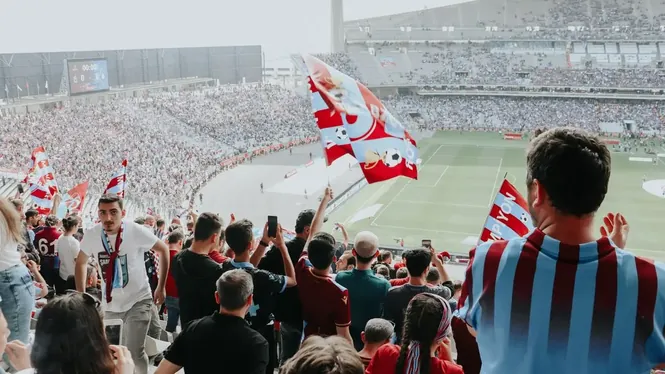
Some matches are games; derbies are arguments settled in public. Two clubs from the same city or region, sharing streets and workplaces, meet with a year of bragging rights at stake. Following derby day on Camel Live APK means fast scores and faster drama, and this guide explains what makes these fixtures different.
Derbies break the usual rules of prediction. League positions flatten, stars go missing, and a reserve full back becomes a folk hero. Understanding why helps you read the chaos as it unfolds.
What Makes a Match a Derby
Geography is the classic ingredient: two clubs close enough that their fans meet daily. History deepens it, disputed players, stolen titles, and matches that still get argued about decades later. Some derbies divide cities by neighbourhood, class or tradition, and the split runs through families.
Not every rivalry is local. A few fixtures between distant giants carry derby level heat because of repeated title races and famous incidents. What they share with local derbies is memory: each meeting adds to a story both sets of fans can recite.
Workplace and family splits give derbies their stakes. The loser does not just drop points; they face the winners at breakfast, at work and at every family gathering until the next meeting, which is why fans rank derby wins above routine victories over bigger clubs.
The ingredients of a true derby:
- Two clubs sharing a city or region
- Fans who meet daily in ordinary life
- A history of disputed matches and players
- Stakes beyond the league table
- An atmosphere noticeably louder than normal
- A return fixture circled from the day dates land
Famous Derbies Around the World
The North West and North London derbies headline England, Glasgow hosts one of world football's most intense divides, and Buenos Aires stops for the Superclasico. Istanbul, Rome, Madrid and the Ruhr all stage fixtures where the city holds its breath for a weekend.
Each has its own texture: some are technical, some are wars of attrition, all are loud. When one of them appears in the Camel Live fixture list, it deserves a star beside it. Our head to head guide shows how to read the historical record these matches keep adding to.
Some derbies are defined by one era: a decade when one side dominated and the other collected grievances. Those eras end, and the first win after a long drought produces celebrations that neutral fans find baffling and participants find entirely reasonable.
Why Form Goes Out of the Window
Pundits say it every time because it keeps being true: derbies compress the gap between teams. The weaker side raises its intensity, the stronger side feels the pressure of expectation, and the match becomes about duels and moments rather than systems.
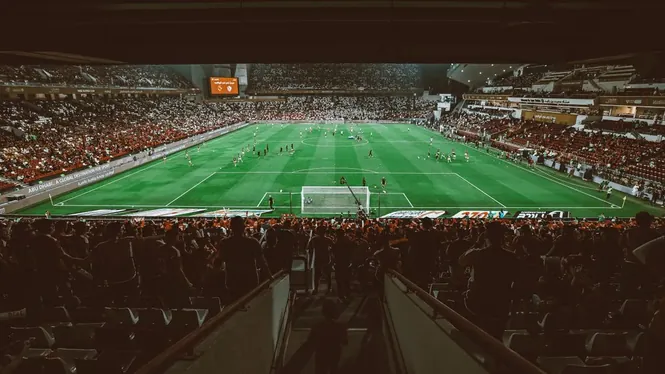
Early goals matter enormously. A favourite that scores first can play its normal game; a favourite chasing a derby from behind faces a crowd and an opponent growing together. Live stats on Camel Live, shots and cards especially, reveal the temperature of the game better than possession does.
Managers feel it too. Experienced derby coaches pick fighters over artists for these games, choosing the midfielder who wins duels over the one who completes passes, because the first twenty minutes of a derby are survived before they are played.
Derby day warning signs for the favourite:
- The underdog's crowd is at full voice early
- Early tackles set a frantic tempo
- The favourite's playmaker is marked out of the game
- Set pieces become the main chance source
- The first goal arrives against the run of play
- Cards begin to shape the final half hour
Following Derby Day on Camel Live
Set goal and red card alerts for the derby, because both change these matches instantly. Check the head to head record in the morning for the story, the lineups an hour before for the surprises, and the card count during play for the mood.
If several derbies share a weekend, as happens in special rounds in some leagues, treat it like a mini tournament: scores in the morning, the big one in the evening, and news catch up at night. Our match day routine adapts perfectly to derby weekends.
Neutral fans should not skip derby day either. These are the matches neutrals remember at season's end, and following one as a neutral, with the history read beforehand, is one of football's great free pleasures.
Cards, Crowds and Fine Margins
Referees manage derbies as much as they officiate them. Early bookings set boundaries, and a lenient first half hour can store up a chaotic finish. Disciplinary records between the two clubs often predict the flashpoints: repeat pairings of aggressive midfielders rarely stay quiet.
Margins are usually fine. Many famous derbies are decided by one goal, a set piece or a goalkeeping error, which is why the head to head pages are full of 1-0 and 2-1 scorelines stretching back years.
Goalkeepers become derby legends disproportionately often. A penalty save or one impossible late stop in a derby is replayed for decades, long after better performances in ordinary matches are forgotten by everyone except statisticians.
Television scheduling can dull or sharpen a derby. A Monday night meeting under lights often crackles more than a Sunday lunchtime slot chosen for safety, and supporters plan their whole week around whichever slot the broadcasters assign to the fixture.
Derby Day in Camel Live
Camel Live cannot manufacture the noise of a derby, but it captures everything measurable about one: the score as it turns, the cards as they accumulate, and the head to head record growing by another chapter. On derby day, Camel Live is the neutral scoreboard both sets of fans keep checking.
Set your alerts early, because derbies punish distraction. A red card while your phone is in another room can change the whole afternoon, and Camel Live makes sure the moments that decide these fixtures reach you the second they happen, wherever you are.
Quick Tips for Derby Day
Read the head to head record the night before, not the morning of. Knowing the story in advance lets you spend derby day itself watching the match rather than researching it while the atmosphere builds.
If your team loses, check the return date before despairing. Derby pain has an expiry date circled in the fixture list, and revenge fixtures have launched many a season's turnaround.
Conclusion
Derbies are football with the volume turned up and the logic turned down. Follow them on Camel Live with alerts on and expectations loose, read the history beforehand, and accept whatever madness arrives. There is always a next meeting, and the argument never really ends.